
Why ERP Software Is Important for Business Growth
April 28, 2023
ERPonTheNet+
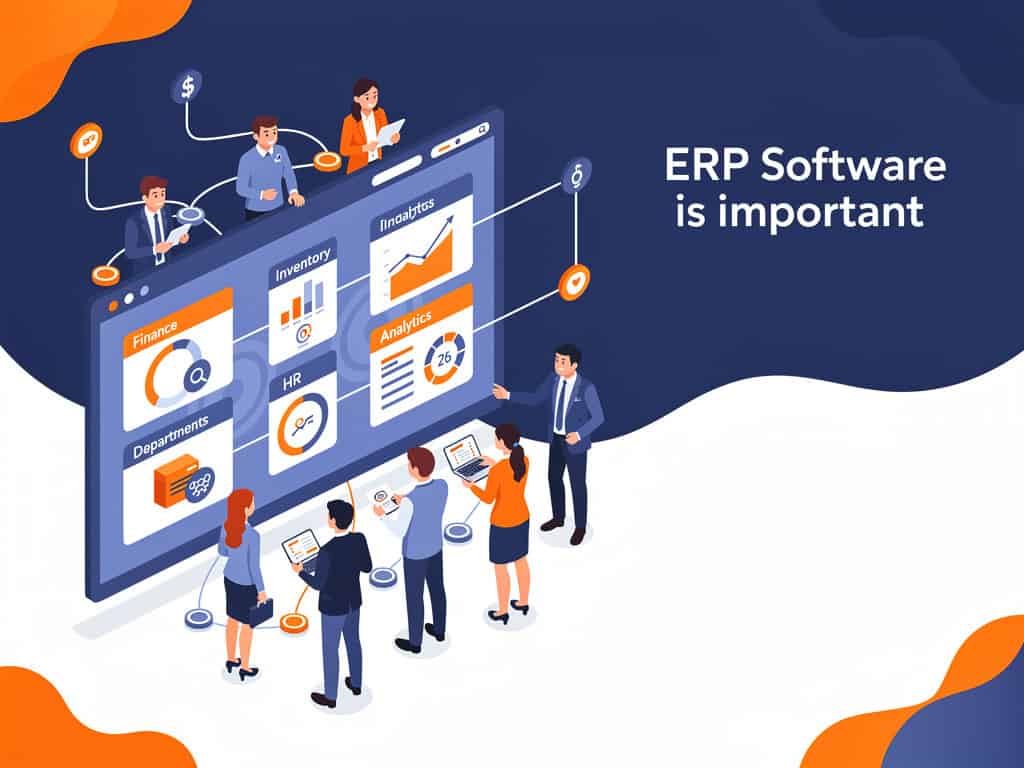
Why ERP Software Is Important for Modern Businesses
Business environment, organizations need accurate data, streamlined operations, and efficient collaboration to stay ahead. However, many businesses still rely on disconnected systems, spreadsheets, and manual processes that create inefficiencies and increase the risk of errors.
This is why Enterprise Resource Planning (ERP) software has become an essential tool for businesses of all sizes. ERP integrates key business functions into a single platform, enabling organizations to automate processes, improve productivity, and make informed decisions based on real-time data.
What Makes ERP Software Important?
ERP software serves as the central nervous system of a business. It connects departments, processes, and data, allowing organizations to operate more efficiently and effectively.
Instead of managing separate systems for accounting, inventory, sales, procurement, and human resources, businesses can manage everything from one centralized platform.
Key Reasons Why ERP Software Is Important
1. Centralizes Business Information
ERP creates a single source of truth for the entire organization. All departments access the same data, reducing duplication, inconsistencies, and communication gaps.
Benefits include:
- Improved data accuracy
- Faster access to information
- Better collaboration between teams
- Reduced manual data entry
2. Increases Operational Efficiency
Manual processes consume time and resources. ERP automates routine tasks such as:
- Invoice generation
- Inventory tracking
- Purchase order management
- Payroll processing
- Reporting
Automation helps employees focus on strategic activities rather than repetitive administrative work.
3. Improves Decision-Making
Business leaders need accurate information to make informed decisions.
ERP provides:
- Real-time dashboards
- Financial reports
- Sales analytics
- Inventory insights
- Performance metrics
With instant access to critical business data, management can identify opportunities and address challenges quickly.
4. Enhances Financial Management
ERP helps businesses gain better control over their finances by managing:
- Accounts payable
- Accounts receivable
- Budgeting
- Cash flow
- Financial reporting
This improves financial visibility and supports better planning and forecasting.
5. Optimizes Inventory Management
For businesses that manage inventory, ERP provides real-time stock visibility and control.
Benefits include:
- Reduced stock shortages
- Prevention of overstocking
- Improved warehouse management
- Accurate inventory forecasting
Efficient inventory management leads to lower costs and better customer satisfaction.
6. Improves Customer Service
ERP systems integrate customer data, sales history, and order information, allowing businesses to provide faster and more personalized service.
This helps organizations:
- Respond quickly to customer inquiries
- Improve order accuracy
- Track customer interactions
- Increase customer satisfaction
7. Supports Business Growth
As businesses expand, managing operations becomes more complex.
ERP systems are designed to scale with business growth by supporting:
- Multiple locations
- Additional users
- Increased transaction volumes
- New products and services
This ensures businesses can grow without operational disruptions.
8. Strengthens Team Collaboration
ERP connects departments through a shared platform.
For example:
- Sales teams can check inventory availability instantly.
- Finance teams can monitor transactions in real time.
- Procurement teams can track supplier activities.
- Management can access company-wide reports.
This improves communication and workflow efficiency across the organization.
9. Enhances Data Security
Business data is one of an organization’s most valuable assets.
ERP systems provide:
- User access controls
- Data backups
- Audit trails
- Secure data storage
These features help protect sensitive information and improve compliance.
10. Reduces Operational Costs
By improving efficiency and eliminating redundant processes, ERP helps businesses reduce operational expenses.
Cost-saving benefits include:
- Reduced paperwork
- Lower inventory carrying costs
- Improved workforce productivity
- Better resource utilization
Industries That Benefit from ERP Software
ERP solutions are widely used across industries, including:
- Manufacturing
- Retail
- Distribution
- Healthcare
- Construction
- Logistics
- eCommerce
- Professional Services
Regardless of industry, ERP helps organizations improve efficiency and gain better control over operations.
The Cost of Not Using ERP
Businesses that continue relying on disconnected systems often face:
- Data inaccuracies
- Slow decision-making
- Inventory issues
- Higher operational costs
- Reduced productivity
- Poor customer experiences
- Difficulty scaling operations
Over time, these challenges can limit growth and profitability.
ERP software is important because it helps businesses integrate operations, automate processes, improve decision-making, and support long-term growth. By providing a centralized platform for managing business activities, ERP enables organizations to operate more efficiently, reduce costs, and deliver better customer experiences.
In an increasingly digital and competitive marketplace, implementing ERP is not just a technology upgrade—it’s a strategic investment in the future success of your business.