
Why You Need an ERP for Your Business | Benefits of ERP Software
January 17, 2023
ERPonTheNet+
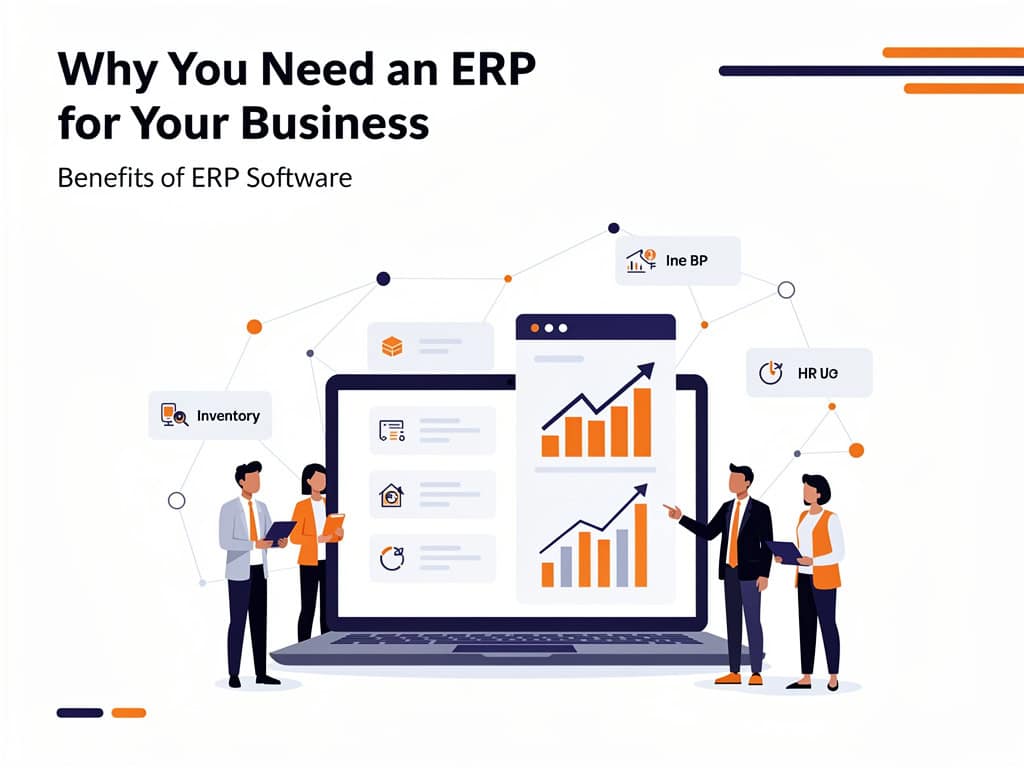
Why You Need an ERP for Your Business
As businesses grow, managing operations becomes increasingly complex. Information gets scattered across spreadsheets, departments use different software, and employees spend valuable time on repetitive manual tasks. These challenges can slow down growth, increase operational costs, and impact customer satisfaction.
This is where Enterprise Resource Planning (ERP) software becomes a game-changer.
An ERP system integrates all your core business functions into a single platform, helping you streamline operations, improve efficiency, and make smarter decisions based on real-time data.
Whether you’re a startup, small business, or large enterprise, ERP can help you achieve greater control over your business and prepare for sustainable growth.
What is ERP?
Enterprise Resource Planning (ERP) is a business management software that connects different departments and processes into one centralized system.
Typical ERP modules include:
- Finance & Accounting
- Sales Management
- Customer Relationship Management (CRM)
- Inventory Management
- Procurement
- Manufacturing
- Human Resources
- Project Management
- Supply Chain Management
Instead of using separate systems for each department, ERP allows all teams to work from a single source of truth.
Why Businesses Need ERP Software
1. Eliminate Data Silos
One of the biggest challenges businesses face is disconnected information.
When finance, sales, inventory, and operations use separate systems, data becomes fragmented and difficult to manage. ERP centralizes information, ensuring everyone works with accurate and up-to-date data.
Benefits include:
- Better communication
- Improved data accuracy
- Reduced duplication
- Faster access to information
2. Automate Repetitive Tasks
Manual processes consume time and often lead to errors.
ERP automates routine activities such as:
- Invoice generation
- Inventory updates
- Purchase orders
- Payroll processing
- Expense tracking
- Report generation
Automation improves productivity while reducing human errors.
3. Improve Financial Visibility
Financial management is critical for every business.
ERP software provides real-time insights into:
- Revenue
- Expenses
- Cash flow
- Profitability
- Budget performance
Instead of waiting days for reports, business leaders can access financial data instantly and make informed decisions.
4. Gain Better Control of Inventory
Inventory mismanagement can lead to stock shortages, overstocking, and lost sales opportunities.
ERP helps businesses:
- Track stock levels in real time
- Monitor inventory movement
- Forecast demand
- Optimize warehouse operations
- Reduce inventory costs
With accurate inventory data, businesses can improve customer satisfaction and profitability.
5. Enhance Customer Experience
Customers expect fast service and accurate information.
ERP systems integrate customer records, orders, invoices, and support interactions in one place, enabling businesses to:
- Respond faster to inquiries
- Improve order accuracy
- Track customer history
- Deliver better service
Satisfied customers are more likely to become repeat customers.
6. Make Data-Driven Decisions
Successful businesses rely on accurate data rather than assumptions.
ERP provides:
- Real-time dashboards
- Performance reports
- Sales analytics
- Financial insights
- Operational metrics
This allows management teams to identify opportunities, address challenges, and make strategic decisions confidently.
7. Improve Team Collaboration
When departments work in isolation, productivity suffers.
ERP creates a connected environment where:
- Sales teams can check inventory instantly
- Finance can monitor transactions in real time
- Procurement can track supplier activities
- Management can oversee operations from a single dashboard
Better collaboration leads to faster and more efficient workflows.
8. Support Business Growth
As businesses expand, managing operations manually becomes increasingly difficult.
ERP systems are designed to scale with your business by supporting:
- Additional users
- Multiple branches
- New products
- Increased transaction volumes
- International operations
This ensures your technology can grow alongside your business.
9. Strengthen Security and Compliance
Protecting business data is more important than ever.
ERP systems offer:
- User access controls
- Data encryption
- Audit trails
- Regulatory compliance support
These features help organizations safeguard sensitive information while maintaining transparency.
10. Reduce Operational Costs
By automating processes, improving efficiency, and reducing errors, ERP helps businesses lower operational expenses.
Common savings come from:
- Reduced paperwork
- Lower inventory carrying costs
- Improved workforce productivity
- Better resource utilization
The result is a stronger bottom line and improved profitability.
Industries That Benefit from ERP
ERP solutions can benefit almost every industry, including:
Manufacturing
Manage production planning, quality control, and inventory.
Retail & eCommerce
Track sales, inventory, customers, and online orders seamlessly.
Distribution
Optimize supply chain and warehouse operations.
Healthcare
Manage patient records, inventory, billing, and compliance.
Construction
Control projects, resources, procurement, and finances.
Professional Services
Improve project management, time tracking, and billing.
The Cost of Not Having an ERP
Businesses that continue relying on outdated systems often experience:
- Inefficient workflows
- Duplicate data entry
- Limited visibility
- Inventory inaccuracies
- Poor customer service
- Delayed reporting
- Difficulty scaling operations
Over time, these issues can significantly impact growth and profitability.
An ERP system helps businesses streamline operations, automate processes, improve visibility, and make better decisions. By integrating all key functions into a single platform, organizations can reduce costs, increase productivity, and position themselves for long-term success.
If your business is struggling with disconnected systems, manual processes, or limited visibility, now may be the perfect time to invest in an ERP solution and unlock your organization’s full potential.